The short answer
Before you move to Philadelphia, know five things: it feels like a big city and a small town and is really a city of neighborhoods; only two subway lines make buses and parking a real planning issue; the food scene is much more than cheesesteaks; the culture is proud, loud and sports-obsessed; and costs vary a lot by neighborhood, with a few built-in taxes. These come from my March 2025 video, with current figures added where they have changed.
Philadelphia is one of the most affordable metro cities in the United States, so it is no wonder so many people are coming from other Northeast cities like New York and DC. I have lived here for almost ten years, and I have sold hundreds of properties here, mainly to people moving in from outside the city. So I know some of the things people like to know before they move. This is adapted from my March 2025 video.
Jump to a topic in the video
- 1:27 1. Big city, small town, city of neighborhoods
- 3:34 2. Transportation and parking
- 6:37 3. The food scene
- 10:22 4. Philly culture
- 12:31 5. Buying, renting and affordability
1. Philadelphia is a big city with a small-town feel, and a city of neighborhoods
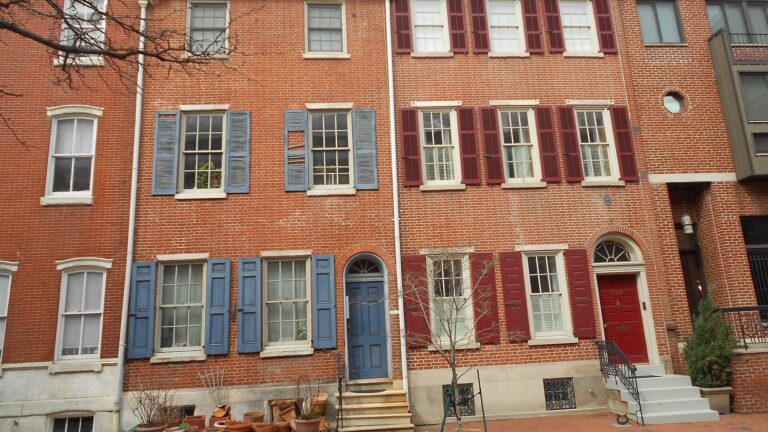
Philadelphia is by no means New York or DC. It has a quainter, quieter feel than those larger cities. You can get around pretty easily, and it is not overwhelming like Manhattan. Even in Center City it is typically not crazy busy. By car or by subway you can usually get from one side of the city to the other in about 20 to 30 minutes, although we do have traffic problems on 76.
Because the neighborhoods have different vibes, you can pick where you want to live and spend time based on what you connect with most. Some neighborhoods have bar and nightlife scenes. Others are more connected with nature, like Germantown, parts of West Philadelphia and Chestnut Hill. Fishtown and Northern Liberties are right off the Delaware River, with trails to walk on and green space as well as restaurants and bars. Old City and Center City are historical, where you will see the Liberty Bell and buildings from when our nation was founded. See our guides to Fishtown, Northern Liberties and Old City.
2. Transportation and parking: only two subway lines, and parking can be tough
If you are coming from New York, you will not have the same public transportation experience. Our subway system is much less extensive. Your best bet may be bus routes, depending on where you live. Broad Street and Market Street are really the only two main subway strips, and if you are not within a 10 to 15 minute walk of one of them, it is tough to make the subway work. The Broad Street Line is the main north-south line, and the Market Street line goes up into Fishtown and the northeast.
Checked November 20, 2026
Since August 2026 SEPTA names its rapid transit lines by letter: the B is the Broad Street Line and the L is the Market-Frankford Line. Source: SEPTA B schedule and map and SEPTA L schedule and map.
Parking depends on the neighborhood. In South Philly, in East Passyunk and West Passyunk, it is probably going to be really tough to park. These are dense residential neighborhoods where many families have two or three cars, and most homes do not have a driveway or garage. Some streets have resident permit parking. If you are bringing a car, or more than one, be aware that depending on the neighborhood it may be hard to park on the street. That may lead you to want a home with parking, which is definitely a luxury in Philadelphia.
Checked November 20, 2026
In the video I said I believed a residential parking permit was $35 a year. The current price is $75 per vehicle per year, with a limit of three vehicles per household. Source: Philadelphia Parking Authority.
Also, 76, the main highway going west toward the suburbs, is a very trafficky highway. Whether you live in the city and commute out to the Main Line, or live out there and commute in, you will probably deal with a decent amount of traffic. 95 on the east side of the city has less traffic, so if you are going up to Bucks County, down to Delaware or over to New Jersey, you may hit less than if you are going west.
3. The food scene is much more than cheesesteaks
Our food scene is incredible, and it is just starting to get recognized on a national stage. Philadelphia is probably best known for cheesesteaks, but there is a lot more. If you want to try some of the top cheesesteak places, Angelo’s, John’s Roast Pork and Joe’s in Fishtown are all great spots. Aside from cheesesteaks, in South Philly you will find a ton of boutique mom-and-pop Italian restaurants, all the way up through the Italian Market.
Checked November 20, 2026
Angelo’s is one of the Philadelphia restaurants in the MICHELIN Guide’s first Philadelphia selection, announced November 18, 2025, as a Bib Gourmand. Source: DiscoverPHL, 2025 MICHELIN Guide ceremony press release.
Fishtown right now has a lot of new restaurants on Frankford Avenue that are among the most popular in the city, like Suraya and Kalaya, along with Front Street Cafe and Middle Child. Many have been recognized in Philadelphia and nationally, and the neighborhood has really grabbed hold of the restaurant scene. East Passyunk is another strip with a ton of great restaurants, and each neighborhood has its own food scene. In Center City, around Rittenhouse, the restaurants are a little higher-end, like Parc right on Rittenhouse Square. On the other side of Center City is Reading Terminal Market, one of the coolest things we have here: a large building full of small businesses where you can find just about any cuisine, mostly grab-and-go.
We also have La Colombe, which became one of the largest coffee distributors in the country and started in Philadelphia, and Yards Brewing, which started here too, plus lots of smaller coffee shops and breweries popping up. For food, coffee, breweries and nightlife, Philadelphia has a really good mix.
4. Philly has a culture: proud, a little gritty, and loud
Philadelphia definitely has a culture and a reputation. For some people it is a great fit, and for others it might be a little off-putting. It is a proud city, a little grittier, with a strong, proud community. People really get behind the sports teams, so if you are into sports, it is a great place to be a fan, especially of Philly teams. It is a blue-collar city.
You will find people who are a little in your face and a little loud, and that is okay. Personally I really like that about Philadelphia. It is not a place where everyone keeps to themselves. People are not mean, they are outspoken and not fake. Locals will tell you what is on their mind. That can be off-putting if you are coming from a more reserved city, or one where sports are not as big a part of the culture. So be prepared to meet some loud and proud Philadelphians, and do not be scared. Just say hi and go Birds.
5. What homes and rent cost, and the built-in taxes
Philly has a reputation as a pretty affordable city in the Northeast, especially for a major metro in the United States, and that can be true. In March 2025 I said you could find a renovated two- or three-bedroom starter home in certain neighborhoods for $300,000 to $400,000, and in some neighborhoods even less. Philadelphia is pretty sprawling, and the price point is higher as you get toward Center City and nearby neighborhoods, including parts of South Philly, Fairmount, Fishtown and Northern Liberties. Price points range drastically by neighborhood. A good rule of thumb is that the closer you are to Rittenhouse Square, the more expensive properties get.
Checked November 20, 2026
In the video I put the average price point at roughly $250,000 to $260,000. For current numbers: the median sold price across Philadelphia County in October 2026 was $290,000 (Bright MLS, see my market numbers), and Census QuickFacts lists a median value of owner-occupied homes of $243,100 (2020 to 2024), which is an owner-reported average over several years. Sources: Bright MLS via Bright Stats Market Snapshot Report, All Home Types, October 2026 (retrieved November 20, 2026); U.S. Census Bureau QuickFacts.
If you are renting, there are a lot of units coming online. A lot of large apartment buildings have been built over the past two to three years. One has over 1,000 units at Broad and Washington, and there are about 10,000 units across a number of buildings in Northern Liberties and Fishtown. Many are giving incentives like two to three months of free rent to drive up occupancy. Philadelphia also has one of the best absorption rates for rental units in the country, which means the new units are being occupied by new tenants, and that speaks to how many people are moving here from New York, DC and other major cities.
We also have one of the highest transfer taxes in the country when you buy, so your closing costs will be a little higher than in a different city. When I made the video it was 2.14% per side. The buyer and the seller are each paying over 2% of the purchase price. We also have a pretty high city wage tax, one of the highest in the country, so if you are coming from a city with lower taxes, that can affect your finances.
Checked November 20, 2026
The realty transfer tax rose on July 1, 2025 to 4.578% in total (3.578% city plus 1% state). If the buyer and seller split it evenly, that is about 2.289% each, up from the 2.14% I quoted, but the split is negotiated (City of Philadelphia). The wage tax is 3.735% for residents and 3.425% for non-residents who work in the city (Department of Revenue). More in our taxes guide.
Finally, if you are buying, a 10-year tax abatement is available on certain properties, typically renovated or brand new construction. It can be a really great savings. For example, for one of the developments I was selling at the time, taxes on the homes would normally have been about $14,000 a year, and with the abatement they were about $2,800 a year, about $250 a month. If you want something brand new and want to keep affordability in check, finding properties with abatements can help you hit your financial goals.
Checked November 20, 2026
That example is from a specific development in March 2025, and the abatement rules have since been adjusted: on new construction the abated share of the building value steps down 10% a year, so the bill rises over time, and homes with a 10-year abatement are not eligible for the Homestead Exemption until it ends. Ask the builder’s agent for the abatement start date and schedule. Source: Office of Property Assessment. Details in our taxes guide.
If you are moving to Philadelphia, start with the Moving to Philadelphia guide for the full checklist, and reach out to me if you want help finding the right neighborhood.
Frequently asked questions
What should I know before moving to Philadelphia?
Five things: it feels like a big city and a small town and is a city of neighborhoods; there are only two main subway lines, so buses and parking matter; the food scene is much more than cheesesteaks; the culture is proud, loud and sports-obsessed; and prices vary a lot by neighborhood, with higher built-in taxes.
Is parking hard in Philadelphia?
In South Philly neighborhoods like East Passyunk, it is probably going to be really tough to park. Most homes have no driveway or garage, and many families have two or three cars. A home with parking is a luxury.
What are the taxes for new Philadelphia residents?
The city wage tax is 3.735% for residents as of July 2026, and the realty transfer tax is 4.578% when you buy, usually split between buyer and seller. See our taxes guide for the full detail.
Is Philadelphia affordable?
Compared with other Northeast cities, yes. In March 2025 I said a renovated starter home could be $300,000 to $400,000 in certain neighborhoods, and less in some. Prices rise toward Center City and Rittenhouse Square. Check our market page for current numbers.
Sources
Every figure on this page was checked against the source below on November 20, 2026. Where a source updates, we update the page and the date.
- SEPTA, B (Broad Street Line) schedule and map, August 23, 2026. Checked November 20, 2026.
- SEPTA, L (Market-Frankford Line) schedule and map, August 23, 2026. Checked November 20, 2026.
- Philadelphia Parking Authority, Residential Parking Permit. Checked November 20, 2026.
- DiscoverPHL, Culinary Stars from Five Cities Gather in Philadelphia for the 2025 MICHELIN Guide Northeast Cities Ceremony. Checked November 20, 2026.
- Bright MLS via Bright Stats Market Snapshot Report, All Home Types, October 2026 (retrieved November 20, 2026) (my own table, see the Market page). Checked November 20, 2026.
- U.S. Census Bureau, QuickFacts: Philadelphia city, Pennsylvania. Checked November 20, 2026.
- City of Philadelphia Department of Revenue, Philly’s Realty Transfer Tax rate is now 4.578% (July 28, 2025). Checked November 20, 2026.
- City of Philadelphia Department of Revenue, Wage Tax. Checked November 20, 2026.
- Office of Property Assessment, New Construction for Residential Properties application (abatement schedule). Checked November 20, 2026.
This post comes from my YouTube video 5 Things You NEED TO KNOW Before Moving to Philly (watch on YouTube), published March 27, 2025.
Philadelphia County figures in this post are based on information from Bright MLS for the period October 1, 2026 through October 31, 2026. Information Deemed Reliable but Not Guaranteed.