The short answer
The Philadelphia Homestead Exemption takes $100,000 off the taxable value of the home you own and live in. At the city’s 1.3998% real estate tax rate, that saves most homeowners up to $1,399 a year. You apply once, online, by phone or by mail, and you keep the savings for as long as you own and live in the home. To get it on your 2027 bill, the deadline is December 1, 2026.
I have been a Philadelphia real estate agent since 2017, and this is one of the few property tax breaks that is easy to get and worth real money. If you just bought a home here, or you are about to close, read this first. I checked every number below against the City’s own pages today.
Checked November 20, 2026
The deadline to apply for the 2027 tax year is Tuesday, December 1, 2026. That is 11 days from today. Closing after December 1? The City says a settlement date between December 2 and 31 can still apply, and for any later closing, call (215) 686-9200 to confirm which tax year your savings start. You can apply online in a few minutes at the Philadelphia Tax Center, and you do not need a username or password.
What the Homestead Exemption is
The Homestead Exemption lowers the taxable part of your home’s assessed value. It does not change what your home is worth on the market, and it does not change the assessment itself. The City’s Office of Property Assessment (OPA) sets your assessed value. The exemption just means $100,000 of that value is not taxed.
Philadelphia has offered it since 2014, and the amount has grown over time. It was $40,000 in 2019, $45,000 from 2020 to 2022, $80,000 in 2023 and 2024, and $100,000 since 2025 (Philadelphia Code § 19-1301.2). If the amount changes again, you do not need to reapply to get the new amount.
How much it saves in 2026 and 2027
The exemption is $100,000 for both tax years. The real estate tax rate is also the same for both: 1.3998%, made up of 0.6159% for the City and 0.7839% for the School District. The City says the rate has not changed since 2016 and will stay the same in 2027. Here is the math:
| Tax year | Exemption | Real estate tax rate | Most you can save |
|---|---|---|---|
| 2026 | $100,000 of assessed value | 1.3998% | Up to $1,399 |
| 2027 | $100,000 of assessed value | 1.3998% | Up to $1,399 |
$100,000 × 1.3998% = $1,399.80. The City rounds that to $1,399. About $615.90 of it comes off the City’s share and about $783.90 off the School District’s share. Because the exemption is a flat $100,000, the savings are the same whether your home is assessed at $250,000 or $900,000. Here are two examples using the published rate. They are arithmetic, not a quote for any specific home.
| Assessed value | Yearly tax with no exemption | Yearly tax with Homestead | You save |
|---|---|---|---|
| $250,000 | $3,499.50 | $2,099.70 | $1,399.80 |
| $400,000 | $5,599.20 | $4,199.40 | $1,399.80 |
I say “up to” because a home assessed below $100,000 cannot save more than its whole tax bill. To see your own number, search your address on property.phila.gov and use the Real Estate Tax Estimator. It shows your assessed value and your bill with and without the exemption. Real estate tax bills are due March 31 each year, and the City starts mailing the 2027 bills on December 1, 2026.
Who qualifies
The City’s rule is simple: you must own the home and live in it as your primary residence. A few details that matter for buyers:
- A mortgage is fine. Having a mortgage does not disqualify you, and neither does being a brand new owner.
- There are no age or income limits. It is open to homeowners of all ages and income levels.
- Condos qualify. An owner-occupied condo unit counts, based on the unit’s own assessment.
- The owner must be a person. Pennsylvania law requires the owner to be a “natural person.” Homes owned by a trust, an LLC or a corporation do not qualify.
- It is one home only. A second home or a rental does not qualify. If part of the house is a business, only the part you live in counts.
- Co-owners are fine, but neither of you can claim a homestead on another property.
- Tangled titles. If your name is not on the deed because you inherited the house or have a rent-to-own agreement, you may qualify for a conditional exemption for up to three years. That uses a paper application, so call the hotline first.
How to apply
You only apply once. The City says you do not need to reapply unless your deed changes, such as when you add or remove a co-owner or refinance in a way that changes the deed. There are three ways to apply:
- Online (fastest). Go to the Philadelphia Tax Center, choose “Search for a property,” enter your address and select your OPA number. Then choose “Apply for the Homestead Exemption only,” or the combined application if you also want to check the other programs below.
- By phone. Call the Homestead hotline at (215) 686-9200.
- By mail. Print the Homestead Exemption application and send it to City of Philadelphia Department of Revenue, P.O. Box 52817, Philadelphia, PA 19115.
If the property still lists the previous owner, the City says to call the hotline or use the paper application. After you are approved, you get a decision letter in the mail, and the exemption shows up in the OPA property search. If you are denied, the letter explains why, and you have 30 days from the date of that letter to appeal to the Board of Revision of Taxes.
Deadlines for the 2027 tax year
- October 1, 2026: the early filing date. If you applied by then, the exemption shows up on your first 2027 bill.
- December 1, 2026: the final deadline to get it for the 2027 tax year. If you are approved after October 1, you get a second, adjusted bill. If the bill has already gone out, the City puts the savings on your account as a credit, and you can request a refund with a refund petition.
- December 2 to 31, 2026: if you bought and your settlement date falls in this window, the City says you can still apply.
- March 31, 2027: your 2027 real estate tax payment is due.
If your closing falls outside those dates, call the hotline at (215) 686-9200 and ask which tax year your savings begin. Do not guess on that one.
Homestead and the 10-year tax abatement
You cannot have the Homestead Exemption and a 10-year tax abatement on the same property at the same time. The City applies the same rule to other abatements, such as the disabled veterans exemption. Pennsylvania law is behind this: it bars a first-class city from granting a homestead exclusion on a property that has certain tax exemptions for the same tax year (53 Pa.C.S. § 8586).
If you are buying new construction or a renovated home with an abatement, here is what that means in practice:
- You can apply for Homestead once the abatement ends. The City says to apply right away, and ideally during the last year of the abatement so you do not go a year without a discount.
- You can ask to cancel the abatement early to get Homestead sooner. Be careful. The City says that once an abatement is removed, it cannot be put back on the property.
- Which one saves more depends on the home and how many abatement years are left. Run the numbers before you cancel anything. I am happy to walk through it with you. You can also read how the abatement works in our guide to taxes for new Philadelphia residents.
Other property tax relief programs
Homestead is the one almost every owner-occupant should have. The City also runs these programs. Each has its own rules and deadline, so I am only giving the basics here.
- Longtime Owner Occupants Program (LOOP). For people who have lived in their home at least 10 years, whose assessment rose at least 50% in one year or 75% over five years, and who meet income limits. You cannot have LOOP and Homestead at the same time. Applications for 2027 are due September 30, 2027.
- Senior Citizen and Low-Income Real Estate Tax Freeze. Keeps your bill from rising if you meet the age and income rules (or the income rules for the low-income freeze). The City says the low-income freeze can be combined with Homestead. The deadline is September 30 each year.
- Owner-Occupied Payment Agreement (OOPA). An affordable monthly payment plan for past-due real estate tax. The City accepts applications all year.
- Installment plan and Active Duty Tax Credit. Seniors and income-qualified homeowners can pay in monthly installments, with applications due March 31, 2027. Some members of the Reserves and National Guard called to active duty can get a credit.
The Tax Center has one combined application for several of these, and it tells you which programs you appear to qualify for.
Common mistakes I see
- Missing the December 1 deadline. It is the same date every year, and it comes right in the middle of the holidays.
- Assuming the seller’s exemption carries over. The exemption belongs to the owner, not the house. When the deed changes to you, you need to apply.
- Filing on a home you do not live in. A rental or second home does not qualify, and the exemption can be removed. If your home stops qualifying, you must tell the Department of Revenue within 45 days.
- Owning in a trust or LLC. The owner has to be a natural person. If you plan to put your home in a trust, ask your attorney how that affects Homestead.
- Forgetting to re-file after a deed change. Adding or removing a co-owner changes the deed.
- Combining it with an abatement or LOOP. You cannot have either at the same time as Homestead.
- Paying someone to file for you. I would not. The City’s application takes a few minutes and needs no login.
My take
My advice to every buyer: file for the Homestead Exemption the week you close. It is a few minutes of work for roughly $1,400 a year, every year, and nobody does it for you. Property taxes are one of the real costs of owning in Philadelphia, so I want you to use the break that is already there. If you are weighing a new construction home with an abatement, or you are not sure whether your situation qualifies, send me a note and we will go through the numbers together. For the bigger picture, start with my Moving to Philadelphia guide, and look at current Philadelphia market numbers before you set a budget.
Frequently asked questions
How much is the Philadelphia Homestead Exemption in 2026 and 2027?
It is $100,000 of assessed value in both years. At the 1.3998% real estate tax rate, that saves most homeowners up to $1,399 a year ($100,000 × 1.3998% = $1,399.80). The amount went up from $80,000 in 2024 and 2023 to $100,000 starting in 2025.
What is the deadline to apply for the Homestead Exemption?
December 1 each year. To get the exemption on your 2027 bill, apply by December 1, 2026. If you buy a home and your settlement date is between December 2 and 31, the City says you can still apply. Applying by October 1 gets the exemption on your first bill, and later approvals get a second bill with an adjusted amount.
Who qualifies for the Homestead Exemption in Philadelphia?
You must own the property and live in it as your primary residence. The owner must be a natural person, so trusts, LLCs and corporations do not qualify. There are no age or income limits, and having a mortgage does not disqualify you.
How do I apply for the Homestead Exemption?
The fastest way is online at the Philadelphia Tax Center (tax-services.phila.gov). Search your property, select your OPA number and choose the Homestead application. You do not need a username or password. You can also call (215) 686-9200 or mail a paper application to the Department of Revenue, P.O. Box 52817, Philadelphia, PA 19115.
Do I have to reapply every year?
No. It is a one-time application. You only need to apply again if your deed changes, such as adding or removing a co-owner. You do not need to reapply if the exemption amount changes.
Can I get the Homestead Exemption and the 10-year tax abatement?
Not at the same time. A property with an abatement is not eligible until the abatement ends, and the City suggests applying during the last year of the abatement. You can ask to cancel an abatement early, but once it is removed it cannot be put back.
Can I get Homestead and LOOP together?
No. You cannot have LOOP and the Homestead Exemption at the same time. The City’s property search estimator and the LOOP application both include calculators that compare the two.
Does the Homestead Exemption lower my home’s value?
No. It does not change your home’s market value or its assessment. It makes $100,000 of the assessed value tax-exempt, which lowers your real estate tax bill.
How do I know if I already have the Homestead Exemption?
Search your address on property.phila.gov and use the Real Estate Tax Estimator. If you do not have it, you can apply at tax-services.phila.gov. If you have a question about your property, call the Homestead hotline at (215) 686-9200.
Do I have to pay anything to apply?
The City’s Homestead application is completed on its own site with no username or password, and the City does not list an application fee. I would not pay a third party to file it for you. Call the City hotline if you are unsure.
What if I buy a home in Philadelphia after December 1?
If your settlement date is between December 2 and 31, you can still apply for the coming tax year. For other closing dates, call the Homestead hotline at (215) 686-9200 and ask which tax year your savings begin.
Sources
- City of Philadelphia, Get the Homestead Exemption. Checked November 20, 2026.
- Department of Revenue, Own a home in Philly? Make sure you’re getting this property tax benefit (June 22, 2026). Checked November 20, 2026.
- Department of Revenue, Homestead can lower your property taxes, but not every home qualifies (October 26, 2026). Checked November 20, 2026.
- City of Philadelphia, 2027 property assessments and tax relief outreach (June 30, 2026). Checked November 20, 2026.
- Department of Revenue, Got Homestead questions? We have the answers! (November 20, 2025). Checked November 20, 2026.
- Department of Revenue, lower your property tax bill ahead of the 2027 valuations (July 20, 2026). Checked November 20, 2026.
- Department of Revenue, Tax Rate History (real estate tax rates). Checked November 20, 2026.
- The Philadelphia Code, § 19-1301.2 Homestead Exclusion. Checked November 20, 2026.
- Pennsylvania Consolidated Statutes, Title 53, § 8586 (limitations on homestead exclusion). Checked November 20, 2026.
- City of Philadelphia, Apply for the Longtime Owner Occupants Program (LOOP). Checked November 20, 2026.
- City of Philadelphia, Real Estate Tax freezes. Checked November 20, 2026.
- Department of Revenue, Four reasons to sign up for an OOPA (October 13, 2026). Checked November 20, 2026.
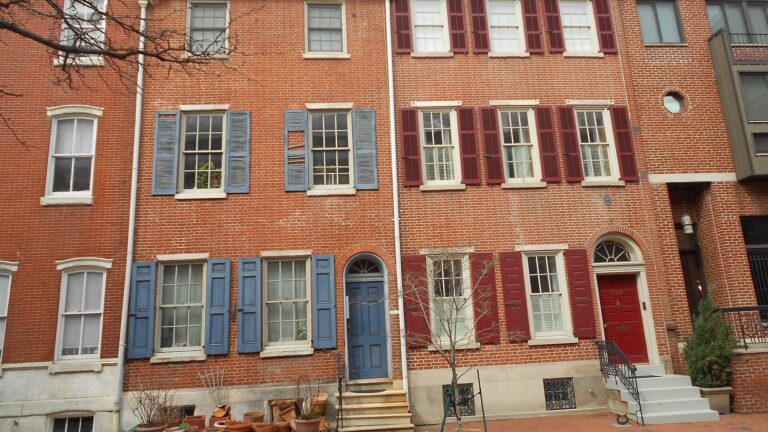
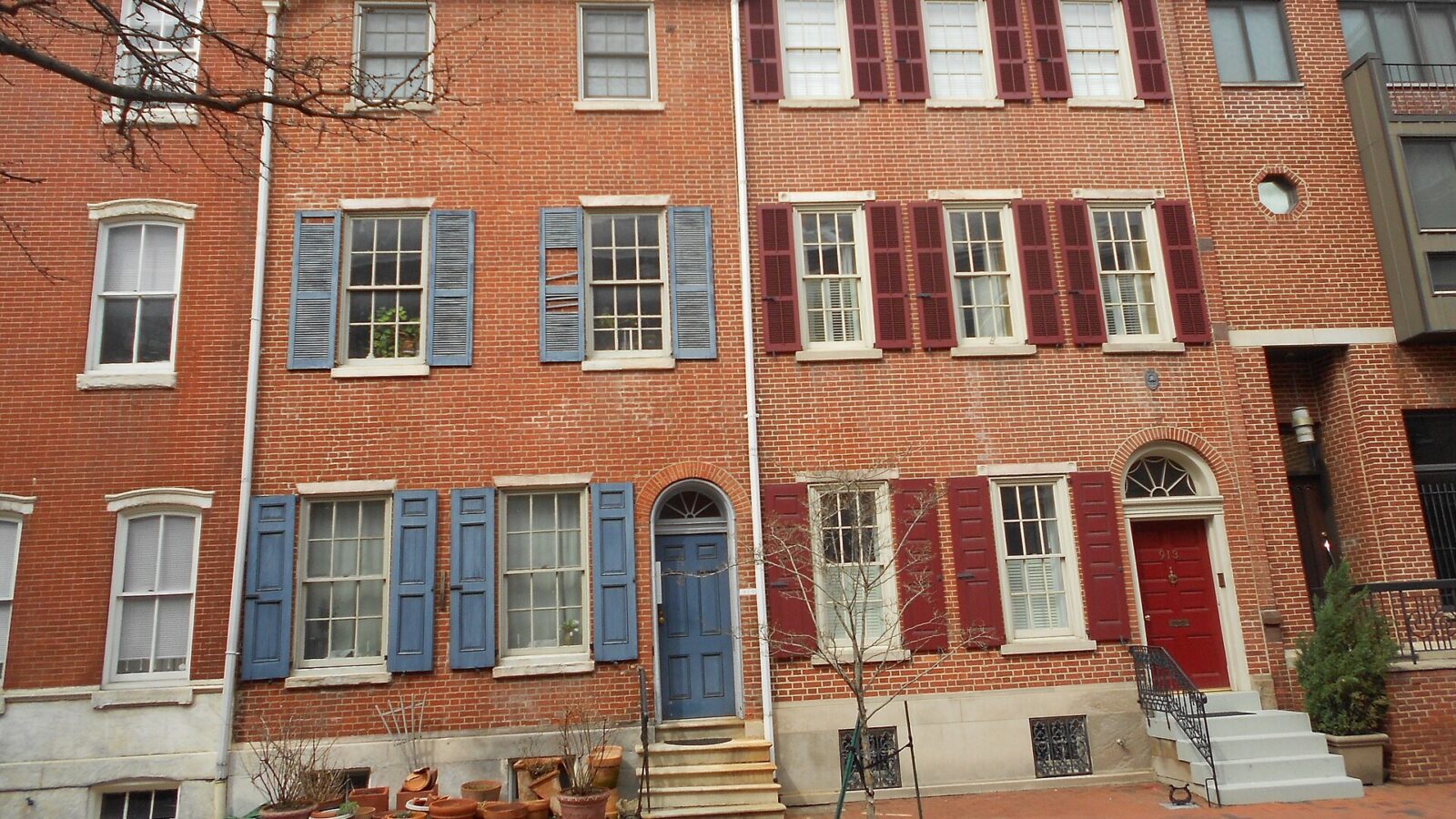
Photo: 913 and 915 Spruce Street, Philadelphia, by Smallbones, released to the public domain (CC0) via Wikimedia Commons. This post is general information, not tax or legal advice. Confirm your own eligibility with the City of Philadelphia Department of Revenue at (215) 686-9200.