The short answer
A rowhome gives you the whole property, more outdoor space and basement storage, with no association, but you pay for every repair, including the roof, sewer line and windows. A condo trades that for amenities and shared maintenance, with monthly association fees, and it can be harder to finance if the building is not warrantable. In my experience condos in Philadelphia appreciate more slowly than single-family homes, though boutique buildings in prime locations can behave more like townhomes.
I have been selling real estate in Philadelphia since 2017, and I have helped hundreds of buyers relocate to the city or upgrade their homes here. From Rittenhouse condos to South Philly row homes with character, I have pretty much seen it all. This post is adapted from my September 2025 video, where I break down the pros, the cons and the hidden costs you will not really hear about unless you know someone local who sells this type of real estate.

Jump to a topic in the video
- 0:47 Lifestyle fit
- 4:06 Monthly costs
- 6:10 Maintenance and repairs
- 7:33 Resale value and appreciation
- 9:38 Financing and warrantability
Which is a better lifestyle fit: a rowhome or a condo?
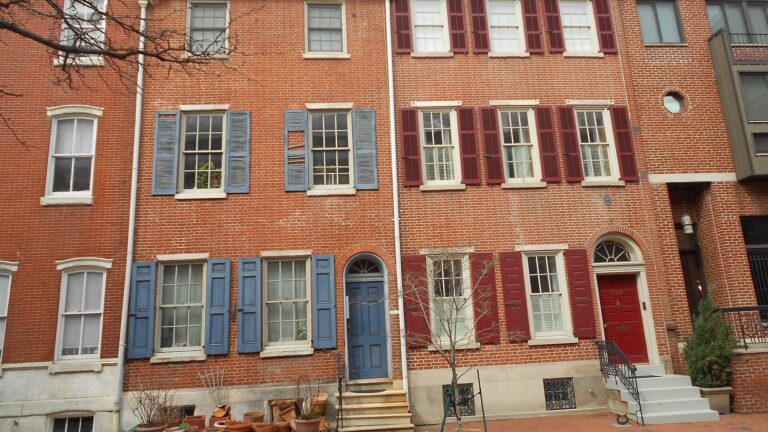
The two types of real estate give you a different feel in everyday life. With a rowhome, you get the entire home to yourself. It is a fee simple property that you own outright, so you do not deal with a condo association or with other owners. You can make decisions for your home as you see fit without going through any outside association other than the local government. If you renovate a rowhome you still need permits from the city, but you do not go through the hoops you would in a condo.
In a condo association you may be dealing with people who have different opinions on what is happening in the building, and you may be limited in what you can do on the exterior. An HOA is the same. With a rowhome you also generally have more outdoor space. Condos are set up more like apartment units, so while a condo may have a balcony, outdoor space is more few and far between. A rowhome typically has at least a back patio, maybe a front porch. And most rowhomes in the city have some storage in the form of a basement, which matters if you have a lot of things or you are downsizing from a bigger home. A condo may not have that storage.
Condos have their own pros. In a bigger building there is usually some level of amenities: a gym, maybe parking, maybe a concierge at the front desk. If you want to be higher up and have views, that is a different setting from walking out your front door onto the street. A condo building is much more like living in an apartment building while still owning your unit. Both have pros and cons, and it depends on what you want your everyday life to look like.
What does each one cost every month?
With condos and HOAs there is some level of a monthly, quarterly or yearly fee for living in the building or community. The reason is that the owners share common elements. In an HOA that might be shared drive aisles or a dog park. In a condo building it covers shared elements and reserves, so that if a common element ever needs to be replaced, there is money in the bank account.
Sometimes the condo fee can be offset by insurance, because with a condo you are often only insuring the inside of the unit and may not have to insure the exterior, depending on the association. Condos may also have a lower price point and lower taxes, depending on what the city values them at, since everyone in a building is splitting the value of the land. A townhome is a full property, and you pay full taxes on the land and the improvement. Generally, though, I would expect a higher monthly cost for a condo because of the fees, compared with a rowhome.
For how Philadelphia taxes are calculated, see my taxes guide, and for what homes are selling for, see my market numbers.
Who pays for maintenance and repairs?
This directly affects the monthly cost. Depending on the condo building, the association may cover some maintenance and repairs, especially on the exterior. With a rowhome, you take the entire home on yourself, and there is no community or HOA covering anything on your behalf. So you have to balance that in the financial equation.
If you are looking at a condo where you are only responsible for the interior, you get an inspection, everything is updated, and there is a level of comfort in knowing you will not face some major expenses. A rowhome could need a new roof or a new sewer line, or have issues with the siding. Those are typically the higher-ticket repairs that can create real financial distress when you are not expecting them. Windows, too: in some condo buildings the building handles them, and in a rowhome that is on you.
If you are comparing a condo where a lot is covered with a rowhome that needs maintenance and updating, that can quickly change the financial picture, so factor it into your evaluation.
Which appreciates faster: condos or rowhomes?
Typically condos in Philly appreciate more slowly than the average single-family home. It is case by case, but that is generally what you find. It is not always so. You may buy a condo in a boutique building in a prime location, and those are much more comparable to a single-family townhome because there is not a huge HOA.
In the large buildings, condos sometimes do not appreciate as much because many outside factors affect the value, such as the association’s reserves and its rules. In general, condo buyers are a specific type of buyer. They want certain amenities and a certain level of comfort, and a little of the benefit of renting with the benefit of owning their own property and doing what they want inside. Rowhome buyers do not need anything from anyone. They just want their own space. A good agent can help you analyze this by showing how much condos have appreciated in certain areas versus how much townhomes have appreciated in the same areas.
Is it harder to finance a condo than a rowhome?
Some condos can be really tricky to finance, especially non-warrantable buildings. Warrantability is a topic a lot of people are not well versed in, but essentially certain buildings cannot qualify for traditional financing. If you are working with a lender, make sure the buildings you are looking at are warrantable and can be financed. If a building is not warrantable, you may have to buy the unit in cash, or there may be two or three local lenders typically willing to lend on that building because they are familiar with it. It will not go through a conventional or FHA process, which is what you typically find with most rowhomes.
Rowhomes are usually a lot easier to finance. Lenders are very familiar with them, and in Philadelphia many of the rowhomes in an area are very similar. There are typically no financing issues unless something big comes up in the appraisal. You will not find warrantability issues with a rowhome. Condos have also recently had higher interest rates than rowhomes, which is another thing to keep in mind in your financial analysis.
So which should you choose?
Those are the factors I would weigh when deciding between a condo and a traditional townhome. If you are still torn, let us talk it through. Shoot me a message and I will help you break it down.
Many of the neighborhoods on this site lean one way or the other. For example, Old City is mostly condos, lofts and apartments, and Queen Village, Graduate Hospital and East Passyunk have more rowhomes. Our Moving to Philadelphia guide covers buying as a newcomer. When you are ready, contact me.
Frequently asked questions
Should I buy a condo or a rowhome in Philadelphia?
It depends on your lifestyle and goals. A rowhome gives you the whole property, outdoor space, storage and no association, but you handle every repair. A condo gives you amenities and shared maintenance, with a monthly fee.
Do condos appreciate slower than rowhomes in Philadelphia?
In my experience, typically yes. Condos in Philly appreciate more slowly than the average single-family home, though it is case by case, and boutique condo buildings in prime locations can be comparable to a townhome.
What is a non-warrantable condo?
A building that cannot qualify for traditional financing. If a building is not warrantable, you may have to buy in cash or use one of the few local lenders willing to lend on it.
Are rowhomes easier to finance than condos?
Usually, yes. Lenders are very familiar with Philadelphia rowhomes, and you will not run into warrantability issues. Condos have also recently had higher interest rates than rowhomes.
Sources
This post comes from my YouTube video Condo vs. Rowhome in Philadelphia | Which One Should You Buy? (watch on YouTube), published September 22, 2025. Everything here is my own view and experience as a Philadelphia agent.