The short answer
Philadelphia is a walkable, more affordable big city in the Northeast with strong healthcare and universities, a lot of history, and distinct neighborhoods. The main downsides are uneven public schools, high taxes, slow city services, safety that varies block by block, and constant construction. Residents pay a 3.735% city wage tax, and buyers pay a 4.578% realty transfer tax that is usually split between buyer and seller. This is my honest review, adapted from my July 2025 video.
I have lived in Philadelphia for almost ten years. I have sold a lot of real estate here, and I have developed here and worked with the city. So this is not Google talking points. It is what it is really like to live here and work here every day. I recorded the video in July 2025. Below is what I said, edited for reading, with notes where facts have changed since.

Jump to a topic in the video
- 0:28 Pros: walkability and neighborhoods
- 2:18 Affordability
- 3:51 Jobs and healthcare
- 4:54 History and architecture
- 6:23 Location in the Northeast
- 7:49 Cons: public schools
- 9:13 Cons: taxes
- 10:07 Cons: crime and safety
- 11:34 Cons: slow city services
- 12:28 Cons: construction everywhere
What are the pros of living in Philadelphia?
It is walkable, and every neighborhood has its own feel
Philadelphia is a manageable size, so you can get around easily on foot or by bike. The neighborhoods are close to each other. You can walk from South Philly into Center City in about 20 to 25 minutes, and from South Philly to Fishtown or Northern Liberties in 45 minutes to an hour.
Every neighborhood has its own look, feel and vibe, and that is one of my favorite things about the city. Old City is very historical. South Philly has that classic Philly feel. Center City feels like a major city, like New York or DC. Each one offers something different. Our guides to Fishtown, East Passyunk and Old City show how different they are.
It is more affordable than New York, DC and Boston
Philadelphia is much more affordable than the other big Northeast cities, so you stretch your money a lot further. A lot of the people coming in are from those cities. Remote work has made a big impact, and they can still get back to DC, New York or Boston with a quick car ride, train ride or flight.
When I made the video, you could buy a great home in Philadelphia for $500,000 to $600,000, and a renovated home in some parts of the city for as little as $200,000 to $300,000. In comparable areas of New York, DC or Boston, I figured you would pay a million dollars or more for what you get here for half a million.
Checked November 20, 2026
Those prices are my view in July 2025, not a data point. For current numbers, the median sold price across Philadelphia County in October 2026 was $290,000 (Bright MLS), and prices vary a lot by neighborhood. See our market numbers and the Moving to Philadelphia guide. Source: Bright MLS via Bright Stats Market Snapshot Report, All Home Types, October 2026 (retrieved November 20, 2026).
The job market is strong in healthcare, research and universities
There is strong job growth in healthcare, research and biotech, and we are home to a lot of universities: Penn, Drexel, Villanova on the outskirts, and Temple up on Broad Street. There are strong hospitals too, like Penn, CHOP and Jefferson. Typically the medical industry and universities do not get hit as hard in a recession, so it makes for a stable economy. It is a great city for medical residents, grad students and remote workers.
It has history and great architecture
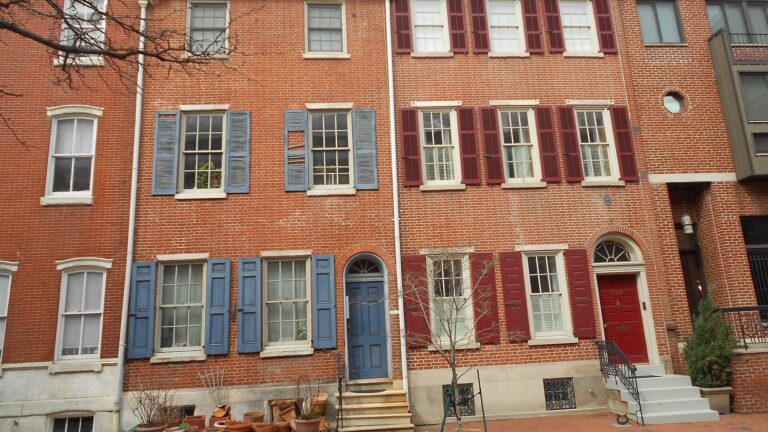
You can see different types of architecture all over the city. Up in Mount Airy, Germantown and Chestnut Hill you get incredibly beautiful colonial homes. In Old City you see homes from the 1600s and 1700s. The history is not in your face everywhere, but as you move through different pockets of the city it gives Philadelphia an authentic feel. It is not sterile.
It is well placed in the Northeast
We are close to New York and DC, and the Jersey Shore is sometimes under an hour away with no traffic. The Poconos or the Catskills are an hour and a half to three hours away. You can take quick flights to Boston, down to North Carolina and Virginia, and across the Midwest. In my opinion Philadelphia is one of the best positioned cities in the country, and I think that is one of the best things going for it long term.
What are the cons of living in Philadelphia?
Public schools are uneven
If you have kids, you have to be aware of the public schools. Not all of them are the best, and some are getting better. There are certain catchments people gravitate toward. A lot of people moving in go with private or charter schools, or move outside the city to New Jersey, Bucks County or the Main Line, where the public schools tend to be rated a little higher. Have a plan for your kids before you pick a neighborhood.
Checked November 20, 2026
The School District of Philadelphia runs enrollment and catchment lookups at its student placement page. Check the catchment for any address you are considering.
Some built-in costs are higher: taxes
Our transfer tax is one of the highest in the country, so buyers pay over 2% when they settle. We also have a high city wage tax, which applies if you live in the city or do business in it. Talk to your accountant about how it affects your income if you are moving from somewhere else. Property taxes are not terribly high, but there have been a lot of reassessments and they are going up. And the 10-year tax abatement for new construction was adjusted. It is not as strong as it once was, and it phases out over the ten years.
Checked November 20, 2026
Current figures, as of November 20, 2026. The Philadelphia wage tax is 3.735% for residents and 3.425% for non-residents who work in the city (Department of Revenue). The realty transfer tax is 4.578% (3.578% city plus 1% state), usually split between buyer and seller, which works out to about 2.289% each, but the split is negotiated (City of Philadelphia). On new construction the abated share of the building value steps down 10% a year (Office of Property Assessment). The City explains how to lower your property tax bill ahead of the 2027 valuations (Department of Revenue). Our taxes guide has the full detail.
Crime and safety vary block by block
Philadelphia gets a bad rap in the national media for crime, and personally I think it is blown out of proportion. You can find incidents in any major city, and if you blow them up on the news it looks like the whole city is in chaos. I do not feel Philadelphia is terribly unsafe, and it has improved over the years I have been here. But you are in a city, and Philly still has some rough pockets.
Philly is a little more block by block than some cities I have been to. One block can be completely redeveloped and feel really good, and the next one does not feel as good. Like in any major city, know where you are and be aware of your surroundings.
City services can be slow
City services can be really slow. When I recorded this we had just come out of a strike over trash pickup, and trash pickup still has delays sometimes. If you are investing or developing here, zoning approvals and permitting can take a long time, and so can implementing a tax abatement. With the city government, expect it to take a long time. That is the rule of thumb here, and if anything I think it got a little slower after COVID. Plan ahead, stay on top of it and follow up a lot.
There is construction everywhere
This one is a negative that is also kind of a positive. When I drive in South Philadelphia there are roads closed, streets torn up and scaffolding everywhere. That is the nature of a city that is developing. It is a sign of growth: more homes, more jobs, more opportunity. But it is very frustrating when you commute around the city like I do, and you end up going west to go east. If you move here, expect detours and construction noise. That is the cost of living in a city that is growing.
So, is Philadelphia worth moving to?
Is Philly perfect? No. But in my opinion it is a great city, full of opportunity. If you are thinking about moving here, the next step is finding the right neighborhood, and there are a lot of them to explore. You will want someone to guide you through that.
Start with the Moving to Philadelphia guide for costs, taxes and a first-30-days checklist, then read the guides for Fishtown, Northern Liberties, East Passyunk, Graduate Hospital, Fairmount, Queen Village, Old City and Olde Kensington. If you want to talk it through, reach out to me.
Frequently asked questions
Is Philadelphia a good place to live?
In my opinion, yes. It is walkable, has distinct neighborhoods, costs less than New York, DC or Boston, and has a stable economy anchored by healthcare and universities. It is not perfect: schools, taxes, city services and construction are real downsides.
Is Philadelphia safe?
I do not think Philadelphia is terribly unsafe, and it has improved in the years I have lived here. It is block by block, and it still has some rough pockets, so know where you are and be aware of your surroundings.
What are the biggest downsides of living in Philadelphia?
Uneven public schools, higher built-in costs like the wage tax and transfer tax, slow city services such as permits and trash pickup, safety that varies by block, and a lot of construction.
Is Philadelphia affordable?
Compared with New York, DC and Boston, yes. In July 2025 I put a great home at $500,000 to $600,000 and a renovated home in some parts of the city at $200,000 to $300,000. Check current sold prices on our market page before you budget.
Sources
Every figure on this page was checked against the source below on November 20, 2026. Where a source updates, we update the page and the date.
- City of Philadelphia Department of Revenue, Wage Tax. Checked November 20, 2026.
- City of Philadelphia Department of Revenue, Philly’s Realty Transfer Tax rate is now 4.578% (July 28, 2025). Checked November 20, 2026.
- Office of Property Assessment, New Construction for Residential Properties application (abatement schedule). Checked November 20, 2026.
- City of Philadelphia Department of Revenue, lower your property tax bill ahead of the 2027 valuations (July 20, 2026). Checked November 20, 2026.
- The School District of Philadelphia, Student Enrollment. Checked November 20, 2026.
- Bright MLS via Bright Stats Market Snapshot Report, All Home Types, October 2026 (retrieved November 20, 2026) (my own table, see the Market page). Checked November 20, 2026.
This post comes from my YouTube video Pros & Cons of Living in Philadelphia in 2025 (Honest Review!) (watch on YouTube), published July 15, 2025.
Philadelphia County figures in this post are based on information from Bright MLS for the period October 1, 2026 through October 31, 2026. Information Deemed Reliable but Not Guaranteed.