The short answer
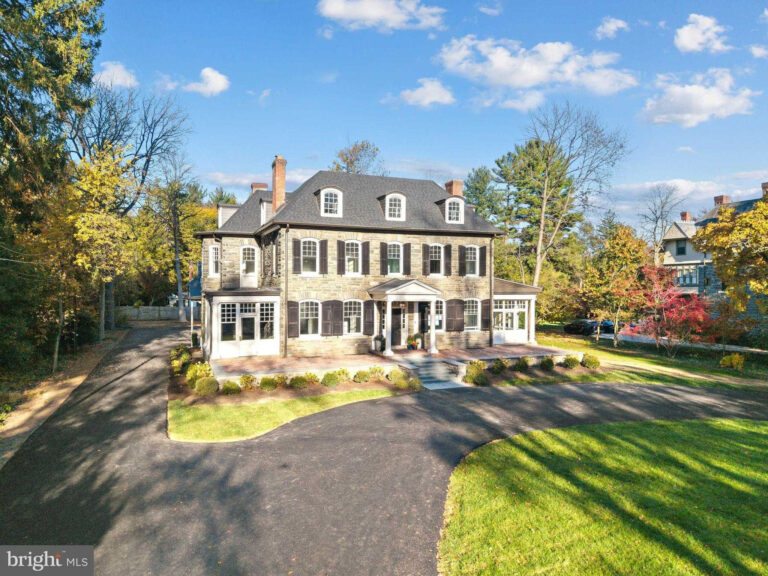
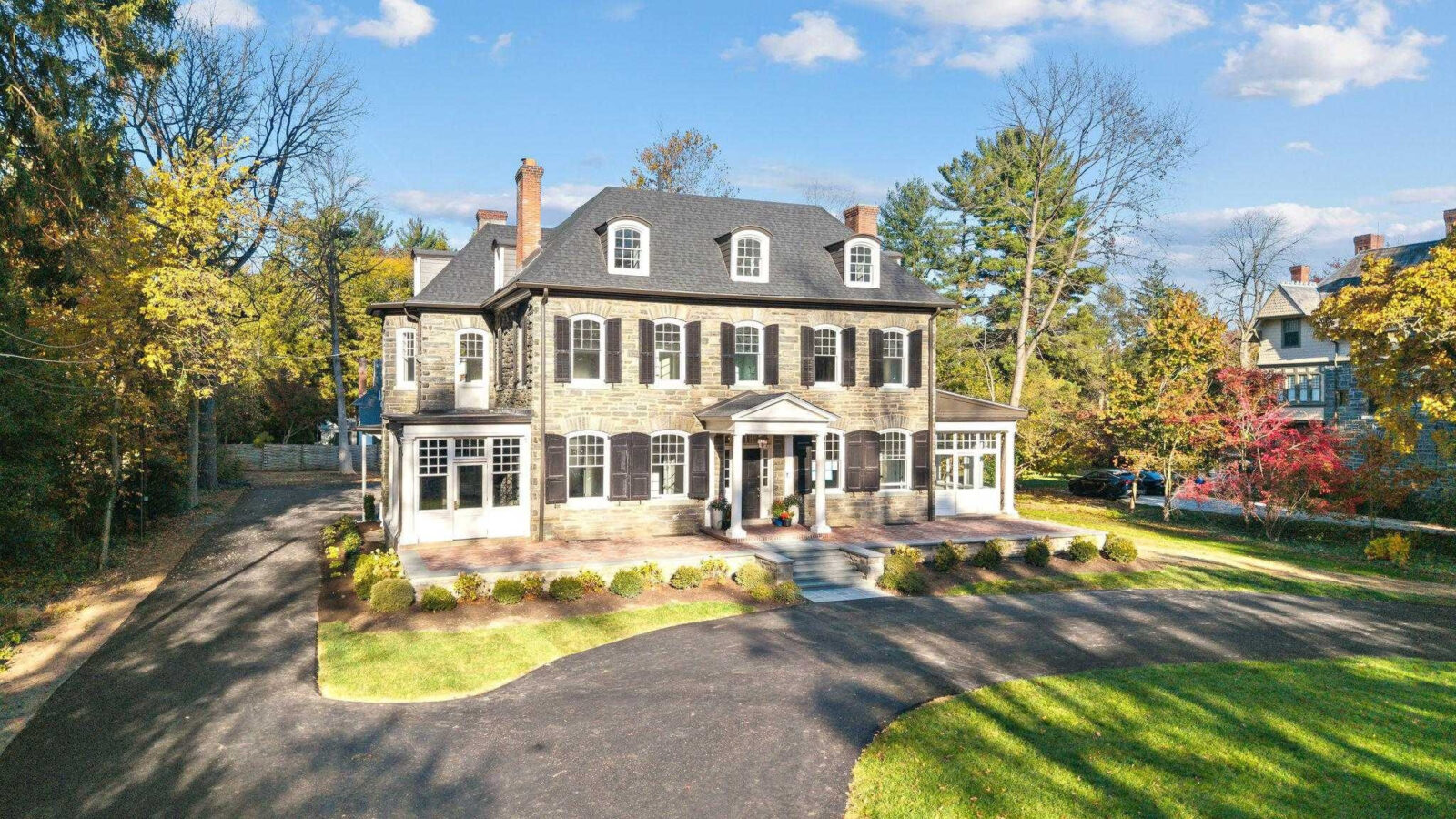
8221 Seminole St is an 1886 stone Queen Anne house in Chestnut Hill’s Saint Martins section, built by Henry Howard Houston and designed by the architects G.W. and W.D. Hewitt. It sits inside the Chestnut Hill National Register Historic District, was restored top to bottom in 2026, and is listed at $4,300,000 with Michele Cooley of BHHS Fox & Roach-Center City Walnut.
Welcome to the first Historic Home of the Week. Every Wednesday I am going to pick one older Philadelphia home that is on the market right now and tell you the story behind it: who built it, why it looks the way it does, and what it is like around it. If you are searching for historic homes for sale in Chestnut Hill, Philadelphia, this one is a great place to start, because it comes with a paper trail most houses never get.
Listing details
Listed by Michele Cooley, BHHS Fox & Roach-Center City Walnut. I am not the listing agent, and Life On Broad does not represent the seller. I am featuring this home because of its history.
8221 Seminole St, Philadelphia, PA 19118. Bright MLS #PAPH2655344. List price $4,300,000. 8 bedrooms, 6 full and 1 half baths, about 8,834 square feet, 0.83 acres. Built 1886. Status: Active as of November 25, 2026.
Listing information courtesy of Bright MLS. Information is deemed reliable but not guaranteed and should be independently verified. Listing details, price and status are as of November 25, 2026 and may change at any time.
What makes 8221 Seminole St special
Most historic houses on the market come with a vague year and a lot of adjectives. This one has a documented builder, architect and contractor. The Chestnut Hill Historic District Inventory, the building by building survey behind the neighborhood’s National Register listing, records the house as built in 1886 to 1887 for developer Henry H. Houston, designed by G.W. and W.D. Hewitt, and built by contractor William C. Mackie. The inventory rates it Significant, its highest category.
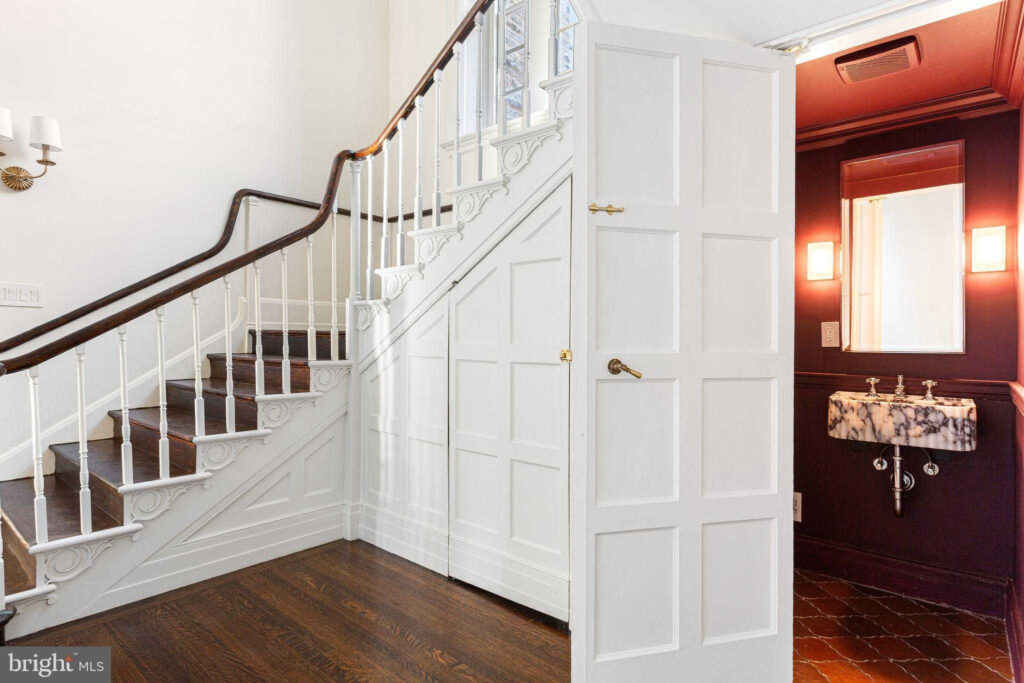
Then there is the restoration. Per the listing, the house kept its original millwork, restored wood windows, antique brass hardware and hardwood floors, while the electrical, plumbing, roof and HVAC were all replaced. It is about 8,834 square feet over three levels, with eight bedrooms, four fireplaces and 0.83 acres. The City’s records and the historic inventory call the street Seminole Avenue. The MLS uses Seminole Street.
The history of Saint Martins and Seminole Avenue
Saint Martins exists because of one man and one railroad. According to the Chestnut Hill Conservancy, in 1884 Henry Howard Houston, a businessman and a director of the Pennsylvania Railroad, arranged a second commuter line on the west side of Chestnut Hill, through land he owned. He called the area Wissahickon Heights. It was later renamed St. Martin’s, after the church he funded.
Houston built his own estate, Druim Moir, plus the Wissahickon Inn (still standing on Willow Grove Avenue), a new home for the Philadelphia Cricket Club, St. Martin-in-the-Fields Church and about 100 houses. He used the Hewitt brothers for most of it. Later his son-in-law, Dr. George Woodward, added about 180 more houses.
Seminole Avenue was one of the first streets to fill in. The National Register nomination names 8205 Seminole, two doors down, as a prime example of Houston’s Queen Anne houses. That 1885 house, also by the Hewitts, is individually listed on the Philadelphia Register of Historic Places. 8221 followed a year later, and in 1888 Houston added a stone and shingle carriage house behind it, now its own home on Navajo Street.
The architecture: Queen Anne in Wissahickon stone
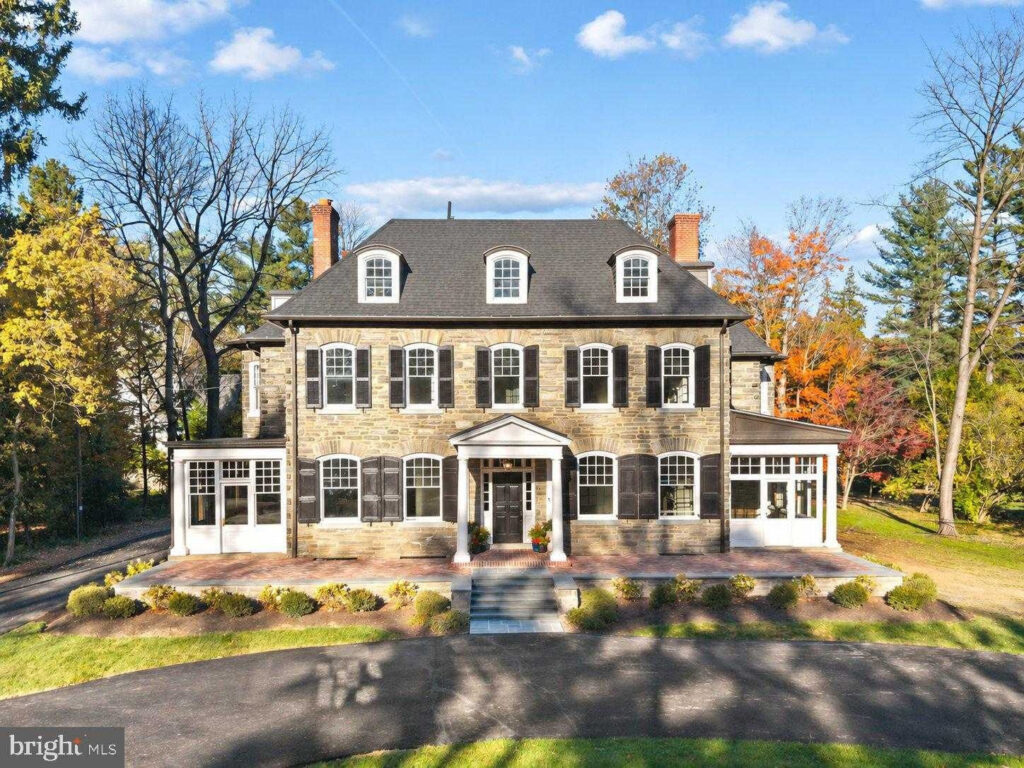
The inventory describes 8221 as a 2 1/2 story, five bay stone Queen Anne house with arched openings, a pedimented portico, a hipped roof and three arched dormers. You can still read all of that from the street. The original front porch is gone, removed at some unknown point.
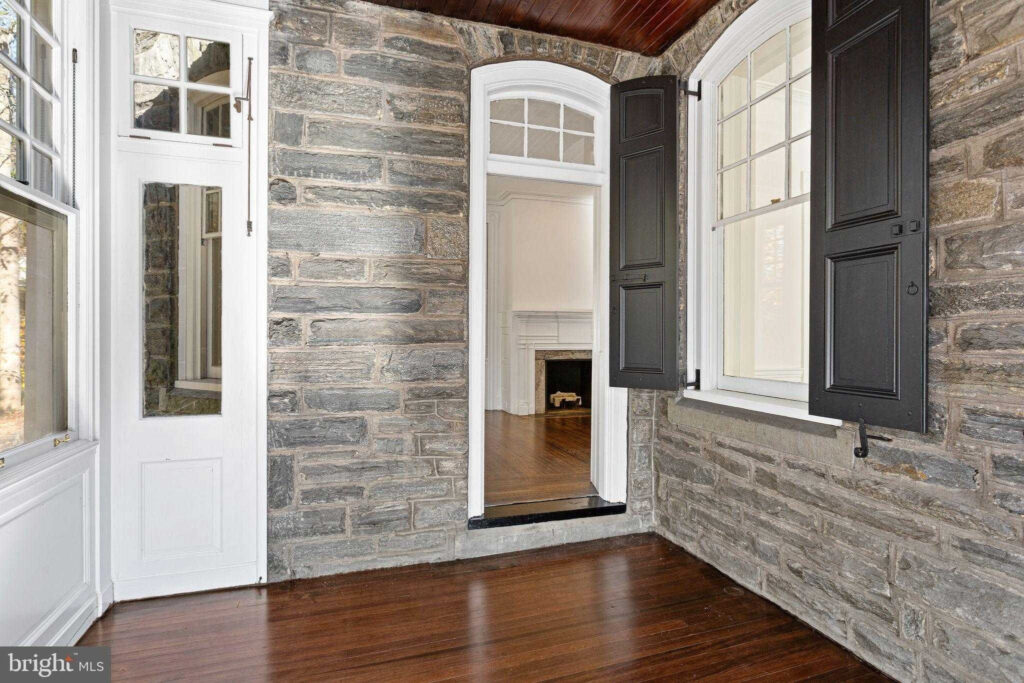
The stone is the thread that ties Saint Martins together. The Conservancy points to Wissahickon mica schist, the gray, glittery local stone, used over and over in houses, walls and gateposts. Many of the stone masons who built here came from Northern Italy. An earlier MLS listing for this house described it as Wissahickon schist, and in the sunrooms you can see the old exterior stone walls up close.
Here is my favorite detail. A teenage Horace Trumbauer, who went on to design Lynnewood Hall and The Elms in Newport, apprenticed in the Hewitt office from about 1884 to 1890, while the Houston work was on their drawing boards. In 1915, the inventory says, Trumbauer came back as an established architect and designed alterations and an addition to this very house. A contractor, Arch K. Schock, added another addition in 1918.
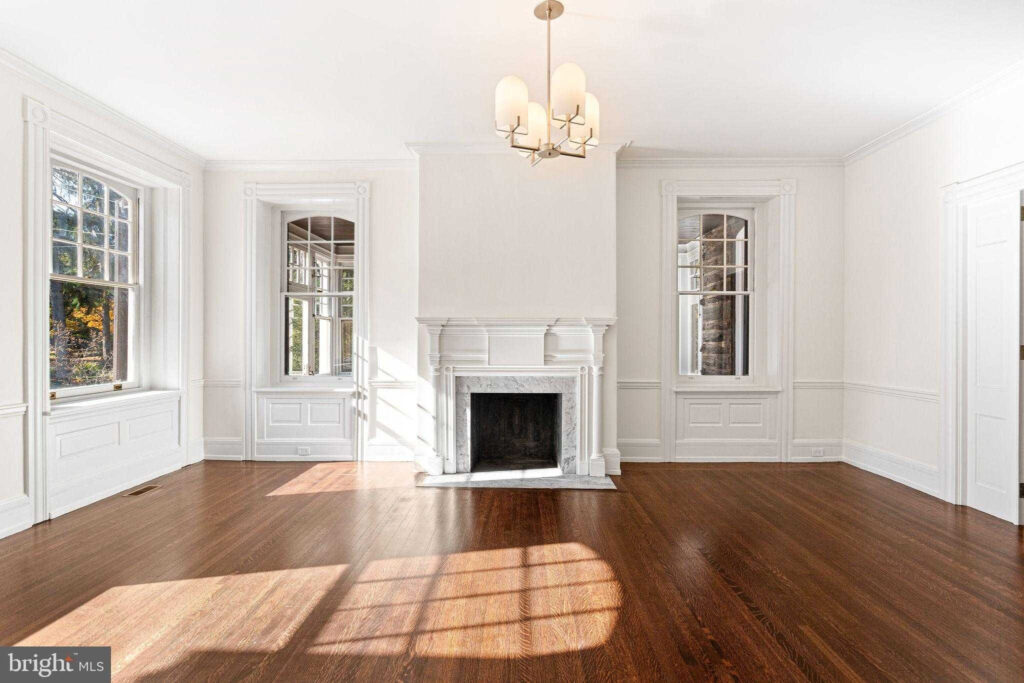
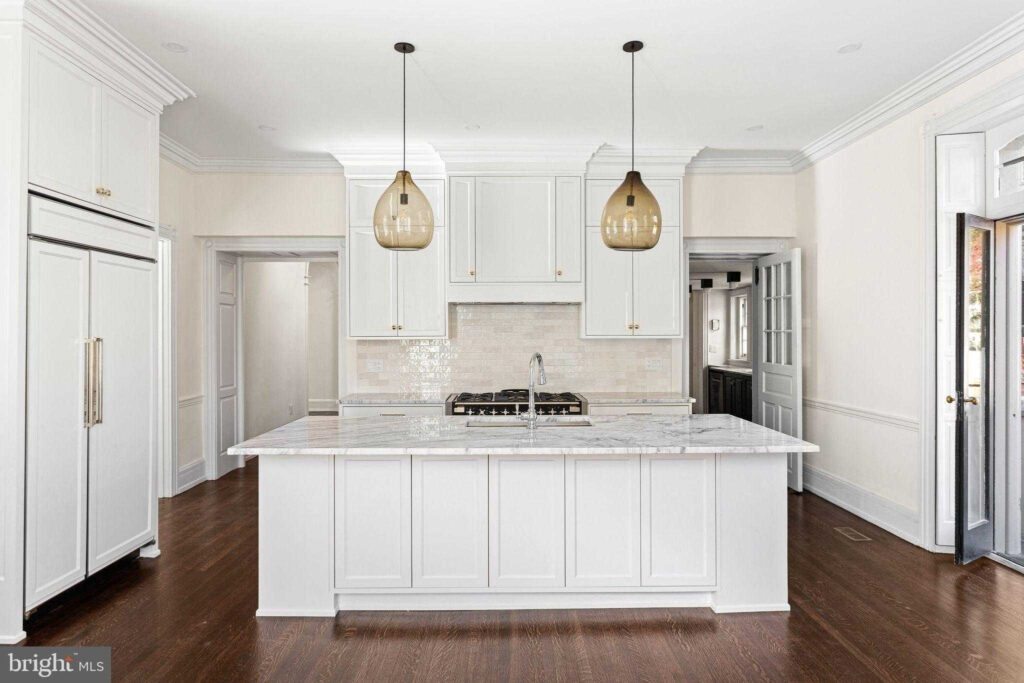
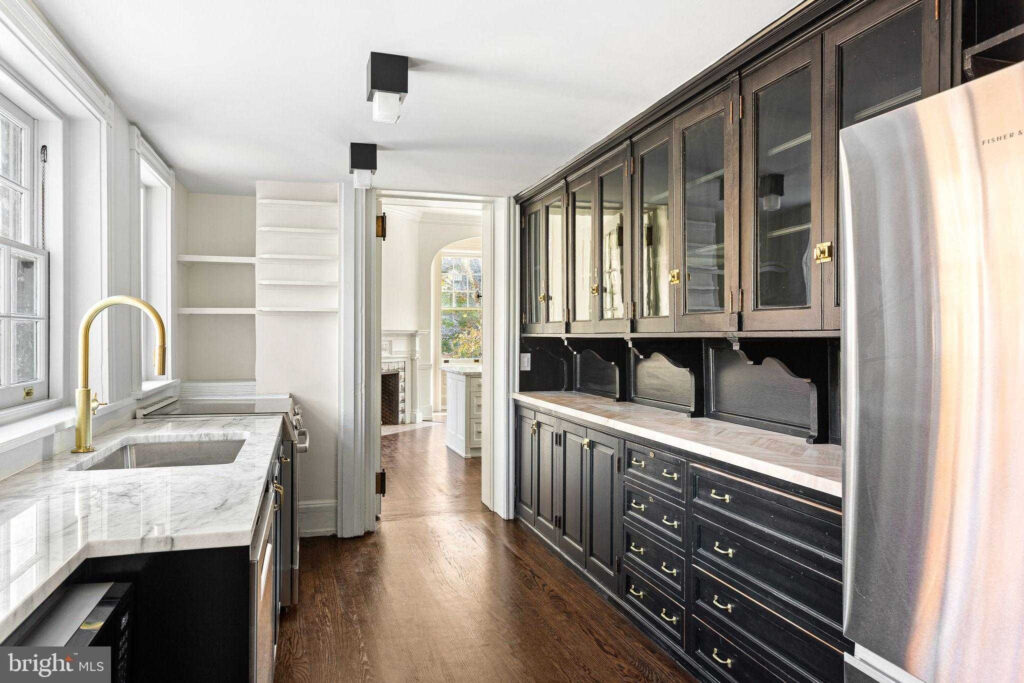
Inside, the listing calls out a gracious foyer, a grand central staircase, formal living and dining rooms, two sunrooms and a family room. The chef’s kitchen has custom maple cabinetry, a walnut hutch, Mont Blanc marble and a 9 foot island. The butler’s pantry works as a second kitchen and keeps its restored original chestnut cabinetry, which is a nice touch in a neighborhood called Chestnut Hill.
Life nearby
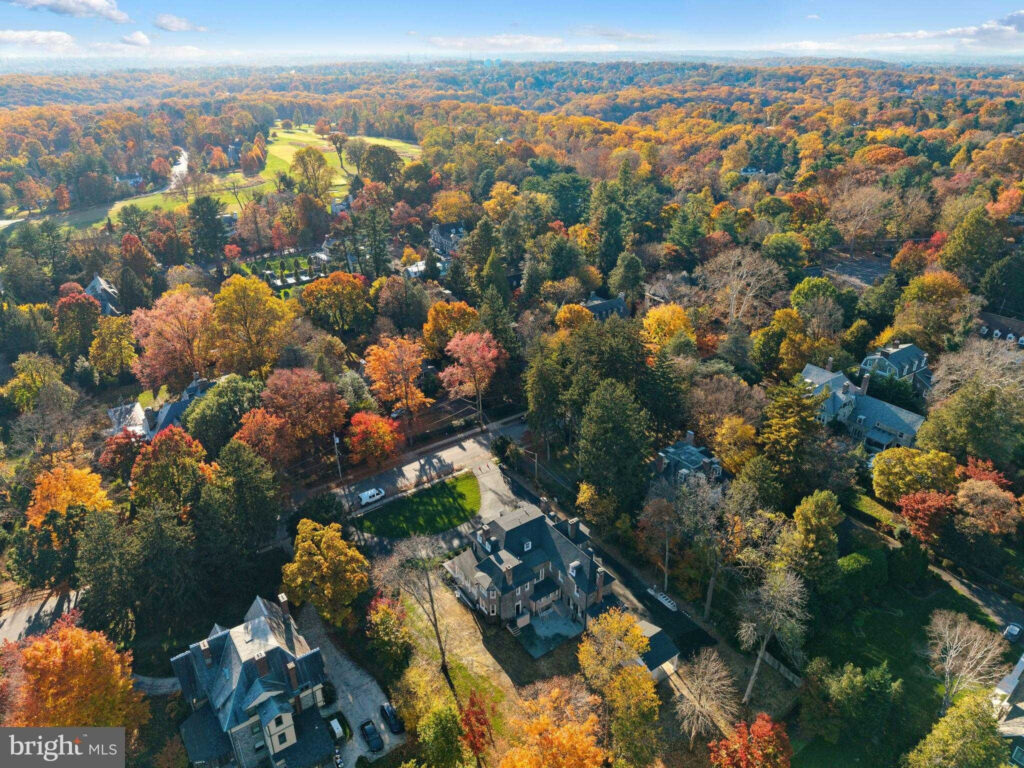
Saint Martins was literally built around the train, and it still works that way. Highland station at 8452 St. Martins Lane and St. Martins station at 320 W. Willow Grove Ave are both on SEPTA’s Chestnut Hill West Line, which runs to 30th Street, Suburban and Jefferson stations in Center City. The Chestnut Hill East Line, the older 1854 route, stops on the other side of the neighborhood.
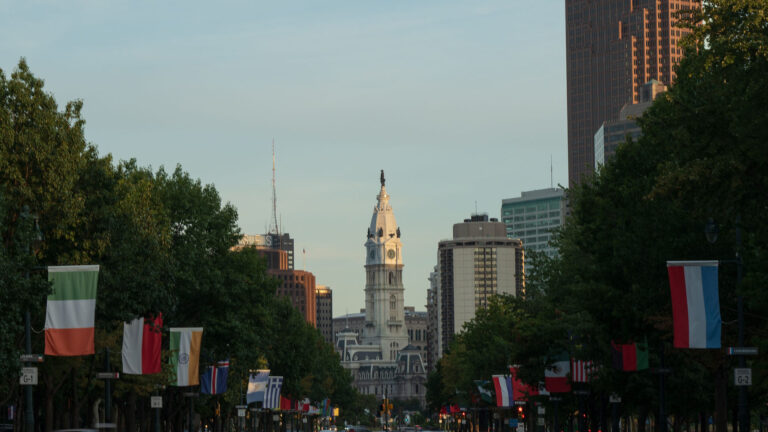
Germantown Avenue is the main street, lined with independent shops, cafes and restaurants in old stone storefronts. Wissahickon Valley Park, with Forbidden Drive and the Valley Green Inn, is a short drive or a good walk away. Here is how I described Chestnut Hill in one of my videos:
In Chestnut Hill, you are paying for space. You’re paying for greenery. It’s a village style main street that honestly it feels like you kind of teleported back to like this cobblestone street that has these little boutiques and markets. It does not feel like you’re in Philly.
Me, on Chestnut Hill, in my video on the most expensive neighborhoods in Philadelphia

For the full picture, read my Chestnut Hill neighborhood guide.
Frequently asked questions
Is 8221 Seminole St in a historic district?
Yes, the Chestnut Hill National Register Historic District, listed in 1985. It is not on the Philadelphia Register and not in a local historic district, per the Philadelphia Historical Commission’s data I checked on November 25, 2026.
What does National Register status mean for an owner?
The National Register is a federal honor and does not limit what a private owner can do on its own. Local designation is what triggers Historical Commission review of exterior work. Check any address with my historic district checker.
Who designed 8221 Seminole St?
G.W. and W.D. Hewitt, for developer Henry H. Houston, in 1886 to 1887. Horace Trumbauer designed alterations and an addition in 1915.
Who is the listing agent?
Michele Cooley of BHHS Fox & Roach-Center City Walnut. I am not the listing agent. If you would like help buying a historic home in Philadelphia, reach out to me.
Thinking about a historic home in Philly?
Old houses reward the right buyer, but they come with their own homework, from designation rules to the systems behind the walls. Start with my moving to Philadelphia guide, browse the neighborhood guides, and get in touch when you want to see what is out there.
Sources
Every listing detail and historical fact on this page was checked against the sources below on November 25, 2026.
- Bright MLS listing PAPH2655344 via Cummings & Co. Realtors IDX (status, price, remarks). Checked November 25, 2026.
- Chestnut Hill Historic District Inventory (Chestnut Hill Conservancy), Seminole Avenue and Navajo Street entries. Checked November 25, 2026.
- Chestnut Hill Conservancy, Chestnut Hill National Register Historic District. Checked November 25, 2026.
- Chestnut Hill Conservancy, Chestnut Hill’s St. Martin’s Neighborhood. Checked November 25, 2026.
- National Park Service, Chestnut Hill Historic District, NRIS 85001334. Checked November 25, 2026.
- Athenaeum of Philadelphia, Trumbauer collection biography and Philadelphia Architects and Buildings, Horace Trumbauer. Checked November 25, 2026.
- Philadelphia Historical Commission, Philadelphia Register and local historic district map layers. Checked November 25, 2026.
- SEPTA Chestnut Hill West Line timetable, effective July 5, 2026. Checked November 25, 2026.
- Friends of the Wissahickon. Checked November 25, 2026.